

Hey! Welcome back to the Creator Economy NYC newsletter, your weekly hit of insights and strategies to help you build, monetize, and scale as a creator.
We've said it before and we'll keep saying it: the one-post, one-invoice, see-ya-never brand deal is on its way out. What's replacing it is way more interesting. Brands are starting to bring creators inside the company, with a title, a term, and a seat at the table.
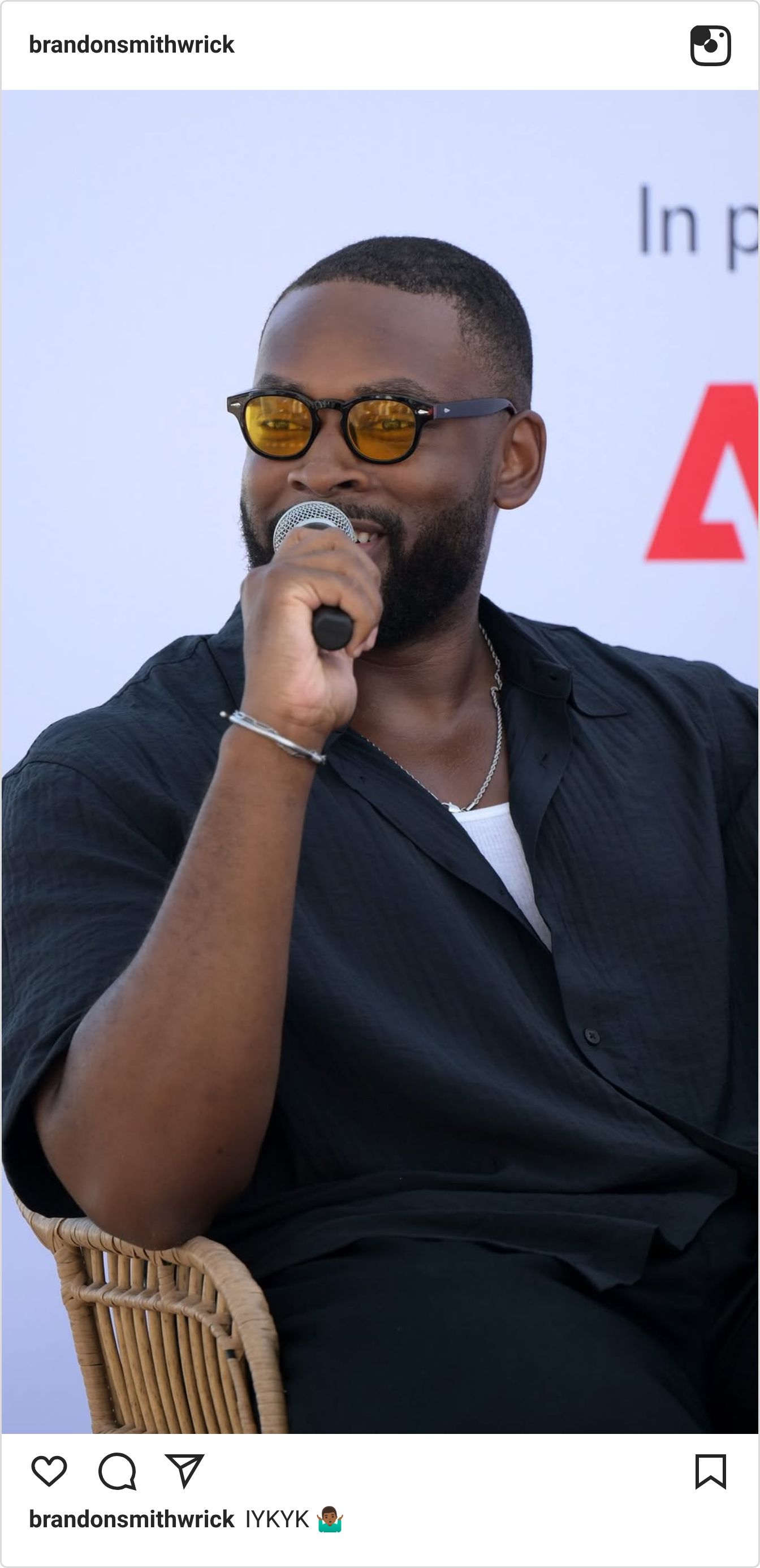
This week: we sat down with friend of CENYC, Brandon Smithwrick, founder of Content to Commas and Sprout Social's first-ever Creator-in-Residence, on the rise of this new kind of brand partnership, what he's learning in his first weeks, and why he thinks a lot more brands are about to follow.
Let's get into it.
P.S. Don’t forget to join us TOMORROW for our Halloween Content Walk in Central Park! Details below.


Two minutes. A chance to win $150. 🎁
Earning money from your creator work? We want to hear how you manage it.
We’re teaming up with Relay on State of Creator Money 2026 to understand what the money side of being a creator actually looks like. The late payments. The slow months. The systems that help you stay on top of it all.
Complete our 2-minute survey for a chance to win one of three $150 B&H gift cards. Three winners will be selected at random.
Whether you’re just starting out, creating alongside a day job or doing it full-time, your experience belongs in this report. Individual responses stay anonymous in everything we publish.

The rise of the Creator-in-Residence
If you've spent any time on LinkedIn lately, you've probably seen a new job title floating around: Creator-in-Residence.

You can see a ton of examples of what this looks like, ranging from an on-staff role to a more talent-facing partnership. For example:
beehiiv just named Milly Tamati its newest Creator in Residence, making educational YouTube videos and sharing what she's learning while building Generalist World.

Superpower posted an in-house Creator in Residence role on its San Francisco team, shooting short-form health content.
Care.com posted a social-first video version.
Companies like Gumloop are building out adjacent creator talent.
And Sprout Social named Brandon Smithwrick its first.
Brandon has a stacked resume in social media he built before becoming a creator: Ralph Lauren, Squarespace, Songfinch, and Kickstarter, where he was Director of Content & Creative. He’s now runs Content to Commas, a newsletter helping creators grow and monetize their content.

Here's his deal at a glance:
Term: three months to start, with a possible renewal
The ramp: conversations started this spring, and Sprout tested the waters with creators at Cannes Lions before announcing in October
The work: a monthly Sprout section in his newsletter and on social, Sprout's free Social Intelligence Summit on October 29th, panels and speaking, and co-authored guides
So what actually is a Creator-in-Residence?
Think brand ambassador, but with a key card.
Sometimes it's a full-on staff role, like the in-house, on-camera gig Superpower is hiring for. Other times, like Brandon's, it's a long-term partnership that runs across channels: content, yes, but also community, events, product feedback, and advising the team internally.
Brandon calls it "almost like this elevated creator consultant capacity."
The common thread is access. A Creator-in-Residence knows what the company is actually building at a deep level, and isn’t restricted by a high level campaign brief.
How it's different from a brand deal
Brandon put the old model pretty simply:
"When you're doing a one-off partnership, you're pretty much following a brief."
A residency is a different animal:
It's two-way. "It's a content partnership, but it's also like, all right, cool. What resources does your community need? And how can I also teach that to your community?"
It's multi-format. Newsletter, social, panels, a summit, co-authored guides.
It's built on real use. Brandon runs his own content through Sprout because "there's no way I can publish everywhere and try and be everywhere without going crazy."
It has a defined term. From what Brandon's seen, residencies are committed stints, which means brands can rotate different creators through as the faces of the program over time.

All of this points to the long game creators should be playing. Danielle Ito, Influencer Lead at Lovable, told us about back in June that brands are thinking in seasons, not single posts.
As she’s thinking about working with creators, she’s asking, “"How do we make this larger and more meaningful over a six-month period of time, versus two months?”
“That can look like content on their channels, an event with their community, a customer story on our channels, bringing them into the work we're doing as a company,” she explained.
Why brands are betting on it
Brandon's read is that B2B brands in particular are newer to working with creators, and they increasingly want to attach themselves to someone who already speaks to their niche.
Creators also bring a lens most in-house teams don't have. They use the product the way customers do, so they can tell a brand "here's where I see people actually using it" and how to champion that message in a way that doesn't feel like an ad.
Sprout went bigger than one creator, too. Around Cannes, it plugged the creators it worked with into brand partnerships with its own customers and helped get them into events. The goal, per Brandon, is different tiers of creators in different cities, "basically just having creators everywhere."
Brandon flagged a habit we see constantly in B2B: watching what competitors do and just copying it. If you're spinning up a creator program because a rival's looked good on LinkedIn, figure out what creators actually make sense for your brand first.
As for how it's measured, every deliverable has its own KPIs: sign-ups, trials, financial impact. The summit alone has over 5,000 registrations, per Brandon. But his personal North Star is simpler:
“I want people to see this content or see the newsletter we write or hear the panel and be able to quote that in a meeting or share it on Slack or say ‘I heard about the social insight’ or ‘here's how this person said they were doing at their company. Here's how we can do at our company.’ That's always been my goal. Giving people tangible things to take back and implement.”
(TBH, this is great bar for any B2B creator to aim for.)
Brandon's the first to admit everyone's figuring it out in real time: "Building the plane while you fly it. Like even I'm learning all this."
How to land one yourself
Brandon thinks this goes mainstream fast and predicts creators will start pitching themselves as a Creator-in-Residence. I also think we'll see these roles posted as job listings on LinkedIn by 2027.
So how do you put yourself in the running?
Start with what you already use. This is the biggest tip for any B2B brand deal. Find the brands that you know deeply, use everyday, and already talk and teach people about. Brandon’s litmus test: "If they didn't pay you, you probably would have talked about it already."
Have opinions. Brandon has takes on everything in his category, from what AI can do for social media management to social listening, publishing, community management, and content ideation. Brands don't hire residents to nod along or create content that easily blends in.
Bring the field notes. You see how real people use the product. That's the consultant half of the job, and it's the part most creators undersell.
Pitch the residency instead of a single post. Instead of a rate card for one Reel, pitch a term, a mix of formats, and what you'll teach their community.
Thanks, Brandon, for the inside look. You should follow Brandon here.

NEXT EVENT (tomorrow): No tricks, just treats (and content) 👻🎃

Our highly requested Creator Content Walk is BACK, and this time we’re getting spooky in Central Park!
Join us on tomorrow morning, October 31st, for a fall stroll filled with content creation, new connections, and some scary good vibes alongside fellow NYC creators.
Costumes encouraged. Content captured.

Two free tools top creators use to keep themselves moving

The Creator Goal Setting Guide (FREE): A simple but powerful document to help you declare who you want to BECOME in 2026. Get it here.
The Creator Accountability System (FREE): Your visual companion for consistent creation in 2026. Get it here.

Thanks for reading! If Brandon's story doesn't convince you to start posting about the tools you already love, I don't know what will.
And if you've hired a Creator-in-Residence (or been one), hit reply. I want to hear how it's going!
F*ck It, Create It,
Brett and Taylor
